Origin · 1988 · Buenos Aires

Not just a feature — a whole new way to lubricate.

In 1988, a small lubricant manufacturer in Buenos Aires uncovered a pattern in sugar mills: bearings weren’t failing because lubrication was poor — but because it was fundamentally mismatched to the application, and also hazardous to the environment.

38 years · 4 partners · 1 product family

The LAAPSA Timeline

1988

LAAPSA founded in Argentina · sugar-only R&D facility opens

1995

First LAAPSA mills
in Brazil and the
Philippines

2008

Lubeman Solutions partnership · India launch via Cenlub Systems

2014

STAI peer-reviewed paper · “Eco- Friendly Oil for Mill Roller Lubrication”

2018

OECD 301/B 
biodegradability certified 
by accredited lab

2026

India franchise scales across Maharashtra, UP, Karnataka, Gujarat, Tamil Nadu

At very high load and slow RPM, sugar mill bearings operate in a regime where additive grease struggles to hold a protective film.

Slow. Heavy. Wet. The challenge wasn’t the physics — it was the fit. So LAAPSA rethought lubrication for the mill: a synthetic gel, designed to carry multi-ton loads at slow speeds.

In 2008, it came to India through Lubeman Solutions — a partnership with Cenlub Systems, the Indian centralised-lubrication-system specialist. The bearings last three times longer. The ETP load drops to near-zero. The mill house gets cleaner.

We don't sell a lubricant. We sell three crushing seasons of peace of mind.

The world's only R&D facility

dedicated to sugar mill lubrication.
In Argentina since 1988. In India since 2008.

What that means in practice

How LAAPSA works. The principle, not the chemistry.

A sustained high viscosity synthetic-gel film keeps the rotating shaft fully off the bearing surface. No metal-to-metal contact. No film breakdown when the load varies.
/ 01 · The film

Ultra-high-viscosity film

A synthetic gel, many times thicker than the base oil of any grease — enough to support multi-ton load even at slow shaft speeds.
/ 02 · The seal

Washout resistance

Synthetic gel structure adheres to the bearing surface and resists washout from cane juice, water and bagasse fibres.
/ 03 · the tail

What leaks biodegrades

The residue biodegrades quickly after the usage under OECD 301/B test conditions. Your ETP doesn’t see it. Your CPCB inspector doesn’t flag it.
Independent lab testing

The numbers behind the claim.

What that means in practice

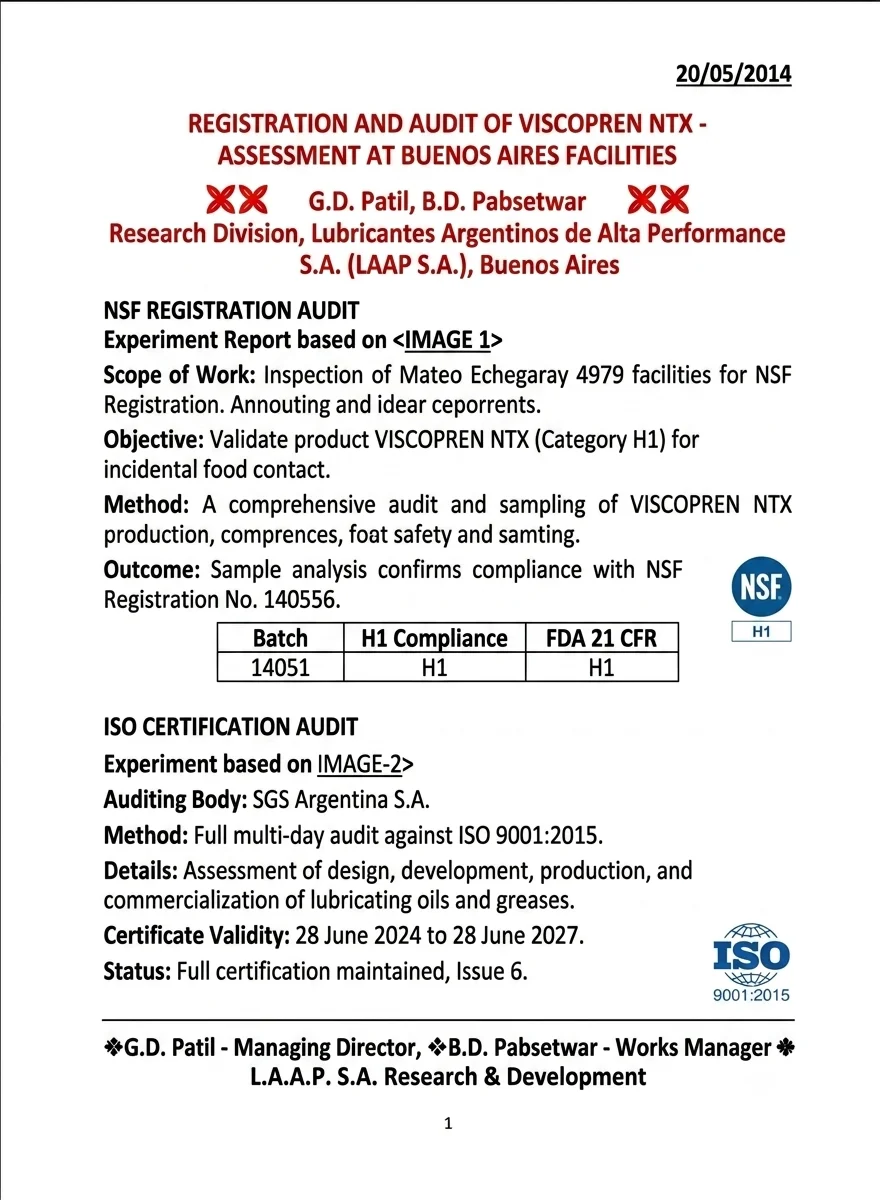
STAI 2014 · ISO 9001:2000 · NSF H1

Twelve years of peer-presented validation.

In 2014, Sahakari Khand Udyog Mandal Gandevi published the first peer reviewed paper on LAAPSA’s performance — at the Sugar Technologists’ Association of India conference, Bangalore, 9 September 2014. It’s been in the citation record of Indian sugar mill lubrication ever since.

STAI 2014 paper

Sugar Technologists'
Association of India · Bangalore
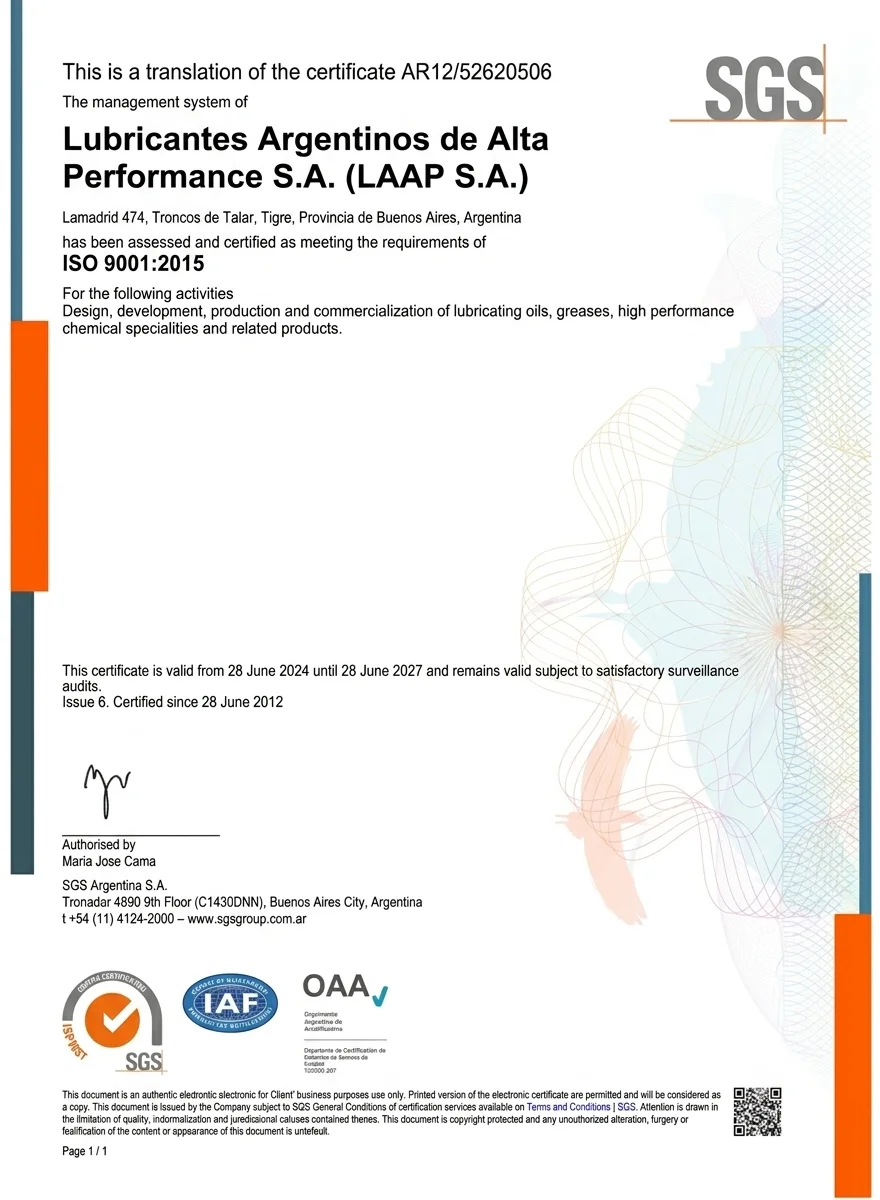
ISO 9001:2000

Quality management system ·
certified manufacturer
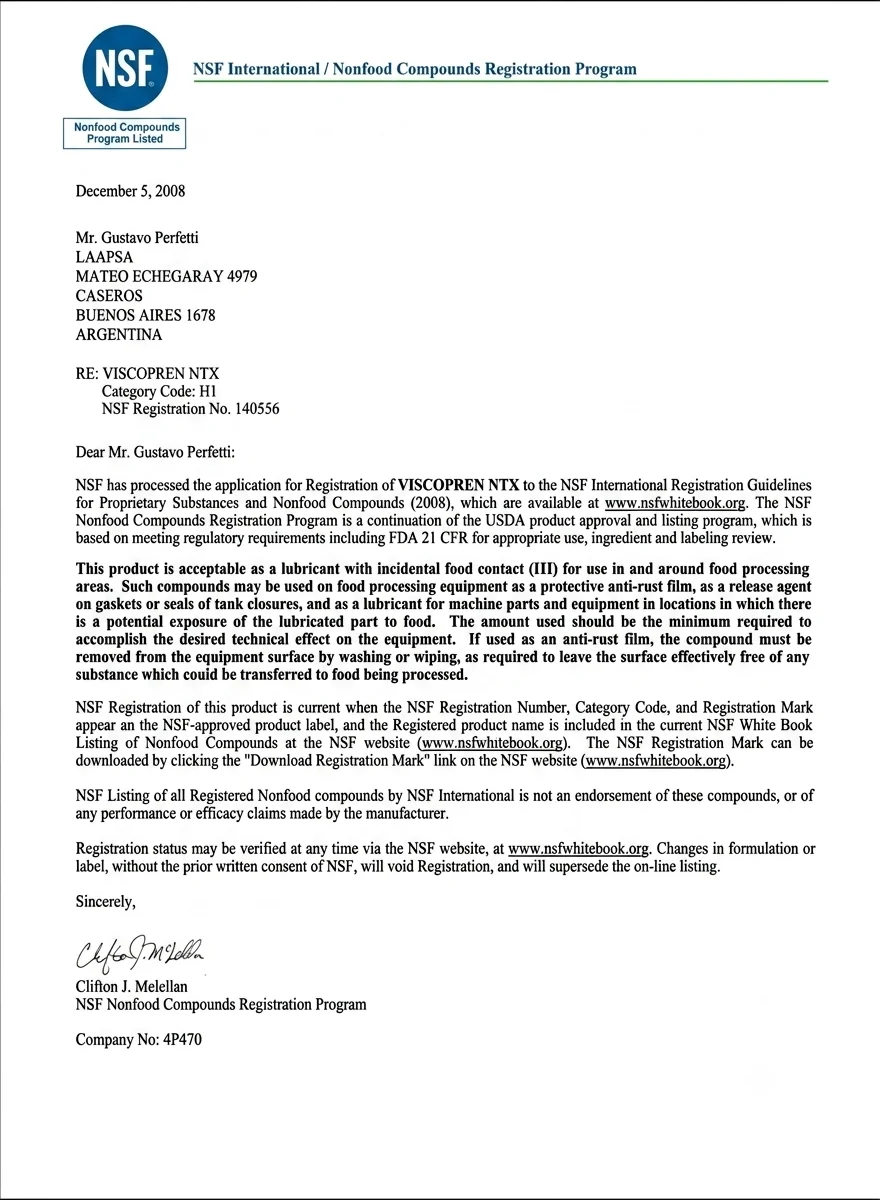
NSF H1 letter

Food-grade compatibility ·
accidental contact permissible

What we believe

Five principles that shape every decision we make..

A note from Lubeman Solutions

For 40 years, we've watched bearings fail. This is the only product that lets them retire instead..

When we partnered with LAAPSA in 2008, we’d already been installing centralised lubrication systems in Indian sugar mills for two decades. We’d seen every grease. Every additive blend. Every “premium” bituminous oil.

LAAPSA was the first product where the physics matched the application. Not a better version of the old category — a different category entirely. The bearing doesn’t wear because there’s no metal contact. The ETP load drops because whatever leaks biodegrades. The mill house gets cleaner because consumption drops by a third.

The judgment we made in 2008 is the judgment we’d make today.

— Abhinnay S Mittal · MD · Lubeman Solutions
Abhinnay S Mittal
MD · LUBEMAN SOLUTIONS

What changes after you switch.

Documented in pre-and-post audits with mills running LAAPSA through complete crushing seasons.
Day 90

Trial complete. Audit done

CLS retrofit complete. DBA software live. Operators trained. First peak-week of crushing under LAAPSA.
Day 180

Bearing temp flat at 40– 45°C.

Lubricant consumption 30–40% below grease baseline. Mill-house visibly cleaner. ETP COD/BOD trending down.
Day 365

₹25 lakh documented savings.

Zero peak-season breakdowns. Bearing rebuilds eliminated. STAI conversation. Adjacent product (OG WP) pilot starting.

The next conversation starts 

with a CLS audit. No purchase commitment.

Or a 30-day plant trial. Or a peer-mill introduction. Whichever route gets your data on the table fastest.